When striving to produce a good saxophone tone, one of the most crucial pieces of equipment is the mouthpiece. There are many brands of saxophone mouthpieces being manufactured using a variety of materials, encompassing a wide price range and designed for performers at all levels of development. Beginning saxophonists usually play the stock mouthpieces sold with their student model saxophones. These synthetic mouthpieces are inexpensive, mass-produced and primarily designed to produce the basic sound. As a saxophonist progresses, the stock mouthpiece is usually replaced by one made of ebonite also known as hard rubber. These mouthpieces, which are somewhat more expensive, are made of a better material and with more craftsmanship, allowing the performer to attain a better tone. They also come in a variety of tip openings, facings and chamber sizes providing saxophonists with more opportunities to find a mouthpiece that better suits their particular playing style. Many professional saxophonists perform on hand-finished, hard rubber mouthpieces that allow for maximum expression and individuality.
When selecting a mouthpiece, the tip opening, facing and chamber size should carefully be considered. The tip opening is the distance between the tip of the reed and the tip of the mouthpiece. Mouthpieces with small tip openings are easier to control, have a more stable pitch but require a harder reed. As the tip opening increases in size, control becomes more difficult, the pitch is more flexible and a softer reed must be used.
The mouthpiece facing is the distance between the tip of the mouthpiece and the point where the reed and the mouthpiece separate. The longer the facing, the more mouthpiece the saxophonist will need to take into the mouth in order to line up the lower teeth with the position where the reed and mouthpiece separate. Due to this fact, a medium facing usually works best for most performers.
The mouthpiece chamber is the internal cavity inside the mouthpiece and its design has a direct effect on tone and response. The chamber can be small, medium or large in size and have a variety of shapes from round to rectangular. A small, rectangular chamber will produce a brighter tone with more power. As the chamber size increases and becomes more round in shape, the tone will become darker and less powerful.
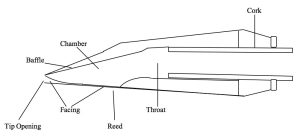
Mouthpiece Diagram Side View
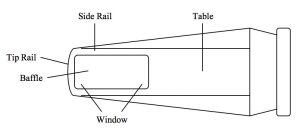
Mouthpiece Diagram Bottom View
Classical Saxophone Tone
When Adolphe Sax invented the saxophone, he designed the mouthpiece with a large, round chamber that produced a dark, round sound with little or no edge. His tonal concept gave the saxophone a beautiful solo voice that was also desirable in ensemble performance because it allowed the saxophone to blend properly with other instruments of the orchestra and symphonic band.
With the formation of the jazz big band saxophone section in the 1930s, the design of saxophone mouthpieces changed giving jazz saxophonists the ability to play with more power and edge in their sound. This trait also carried over into the classical arena as classical saxophonists adopted this tonal style to some extent. Modern day classical saxophonists still strive for a warm, dark sound but with the additional power afforded by the change in mouthpiece design.
Classical Saxophone Mouthpieces
There are numerous saxophone mouthpieces designed specifically for playing classical music. These mouthpieces are usually made of hard rubber, have small tip openings and are played with medium to hard reeds. Their chamber design is somewhat round in nature with several facings and tip openings available to meet the requirements of various performers.
In addition to producing a good tone, several other performance aspects should also be considered when choosing a classical mouthpiece. Good response, intonation and control in all registers, amount of air resistance and if the mouthpiece is reed friendly are all important factors to consider when selecting a mouthpiece.
Mouthpiece response, control and intonation in all registers, especially in the low and upper range of the instrument should be carefully examined. Many mouthpieces will sound great in the middle register but when playing in the extreme registers, both low and high, response may be poor. Also some mouthpieces, while producing a good tone on certain pitches, can be hard to control due to their chamber design, tip opening and facing. The result can be problems with squeaking, intonation and embouchure fatigue.
Air resistance and reed friendliness are two other considerations that should not be ignored. The amount of air resistance a mouthpiece creates while being blown is an important factor in how comfortable it will feel when being played. Some saxophonists prefer a free blowing mouthpiece with little resistance while others like more air resistance.
Reed friendliness refers to the ability of a mouthpiece to produce a good tone on a variety of reeds that have the same strength number but are not exactly equal in reed hardness. Since the strength number given to a reed by the manufacturer is only an approximation of how hard the reed really is, saxophonists need a mouthpiece that can play reeds that varying slightly in strength in order to avoid problems when rotating or switching reeds before a performance. Having a reed friendly mouthpiece will give the saxophonist peace of mind knowing that if a reed is damaged or dies before a big performance, another reed can be easily substituted in its place.
The saxophone mouthpiece is one of the most important components in determining a saxophonist’s tone. After a student has developed a proper mental concept of classical saxophone tone, a suitable mouthpiece may be chosen to assist the player in achieving an appropriate tone for band performance. After doing online research and getting recommendations from band directors, private teachers and performers, students should test play several mouthpieces to discover which one works best for them. With good recommendation information, careful test playing and much patience, students should be able to find a mouthpiece that will assist them in achieving their ideal classical saxophone tone.
Dr. Tracy Heavner is an internationally renowned music educator and distinguished performance artist who has performed in more than fifteen countries on five continents as an artist for Cannonball, D’Addario, and Jody Jazz Music Corporations. He is also a recording artist for LiveHorns.com, a music studio whose projects have received two Grammy-nominated projects and a Dove Award. Dr. Heavner has served on the faculty of the University of South Alabama for the past twenty-eight years, where he is a professor of saxophone, music education, and jazz studies. In addition, he has authored two books, the most recent is entitled Saxophone Secrets: 60 Performance Strategies for the Advanced Saxophonist published by the Rowan & Littlefield Publishing Group.







Leave a Reply
You must be logged in to post a comment.