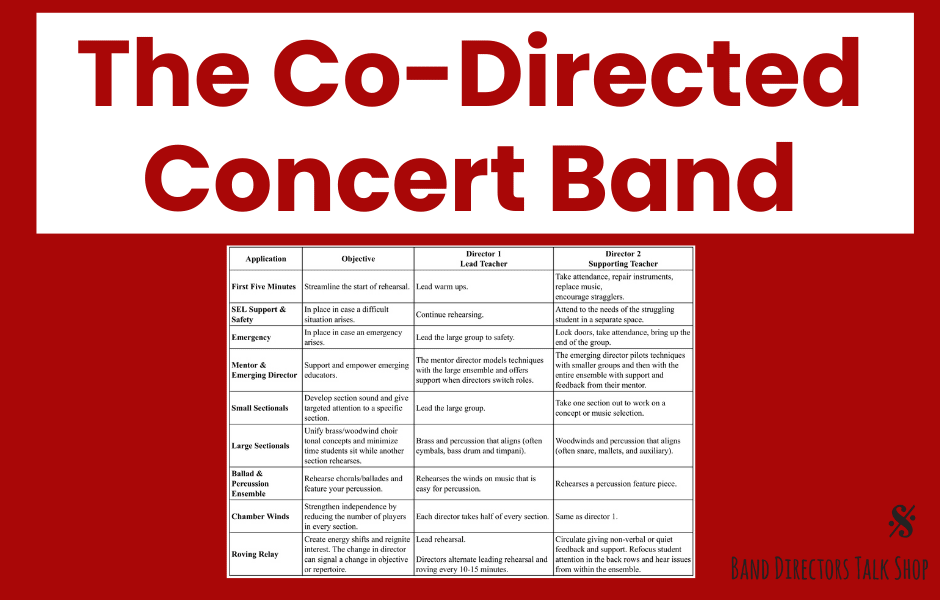
Why Co-Direct?
Team-teaching is a familiar concept in music education. It is commonly used in marching bands, musicals, and large districts with multiple band directors, most notably in Texas. However, it was not something I had encountered much of in rural upstate New York. For my first seven years, I taught fourth through eighth-grade band on my own, but when the high school band director announced he would be retiring in three years, we started doing things differently.
It began with a simple schedule swap. I took on a high school jazz band, and he took on a middle school one. Then we aligned our lunches so I could ask him all my questions. When he retired, he told me, “Switching those jazz bands was the best thing we ever did.” For me, it was the first step in seeing those two positions with more flexibility. Now, as the high school director, I assist our middle school director with many of the larger sections of band. We don’t co-direct everything, but we both work closely with students from sixth grade through senior year. Mentoring happens easily within instructional time, and enrollment has skyrocketed.
In a co-directed concert band, students gain increased support, stability, and security, resulting in positive behavioral and academic outcomes. The flexible use of schedules, facilities, and equipment makes more resources accessible to more students. Vertical team-teaching in particular creates lasting connections and continuity, helping students stay invested in long-range goals. These enduring relationships are often something both teachers and students look back on fondly.
Directors also gain a shared vision, increased creativity, and professional support. Mentor teachers stay current on educational advancements, while emerging educators learn the tried and true art of healthy longevity in our profession. Both can become collaborative colleagues, modeling supportive practices for our students, who, of course, are our next generation of directors.
Co-Directing Tips
- All of the following applications can be used for an entire rehearsal or just a portion of one, with directors switching roles as they see fit.
- Each director should have the opportunity to be the lead teacher. This can be accomplished by switching roles by piece or by ensemble.
- The responsibilities of each director should be clear. If you are going with a lead director for each ensemble, responsibilities for the lead teacher will probably include: communications home, set ups, seating arrangements, repertoire choice, lesson planning and preparation, program creation, etc.
- With vertical structures and student mentoring/leadership, even smaller districts can use many team-teaching concepts.
- Co-directing is not for every situation. To successfully co-teach, you must trust your colleagues, stay organized, and communicate proactively. The workload of team members needs to be compatible and, at some level, equitable. Also, some school cultures may be operating well without this sort of structure and may not benefit from being changed.
- If you are interested in co-directing, I recommend trying it within your current schedule structure. If it works for you, pilot new schedules with one ensemble only. Test variations while in a hybrid structure and leave opportunities for each director to teach independently as well.
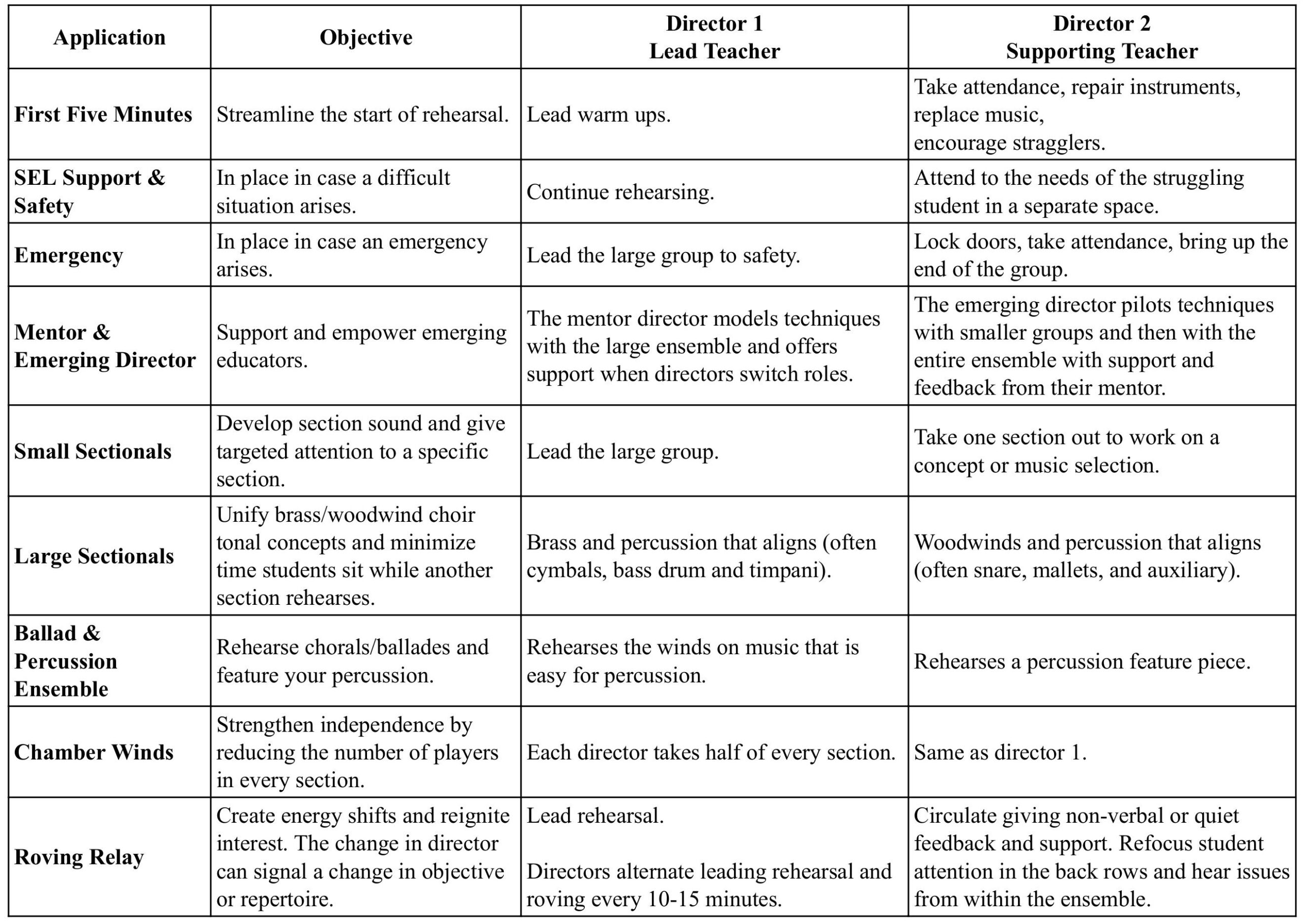
Logistical and Safety Techniques
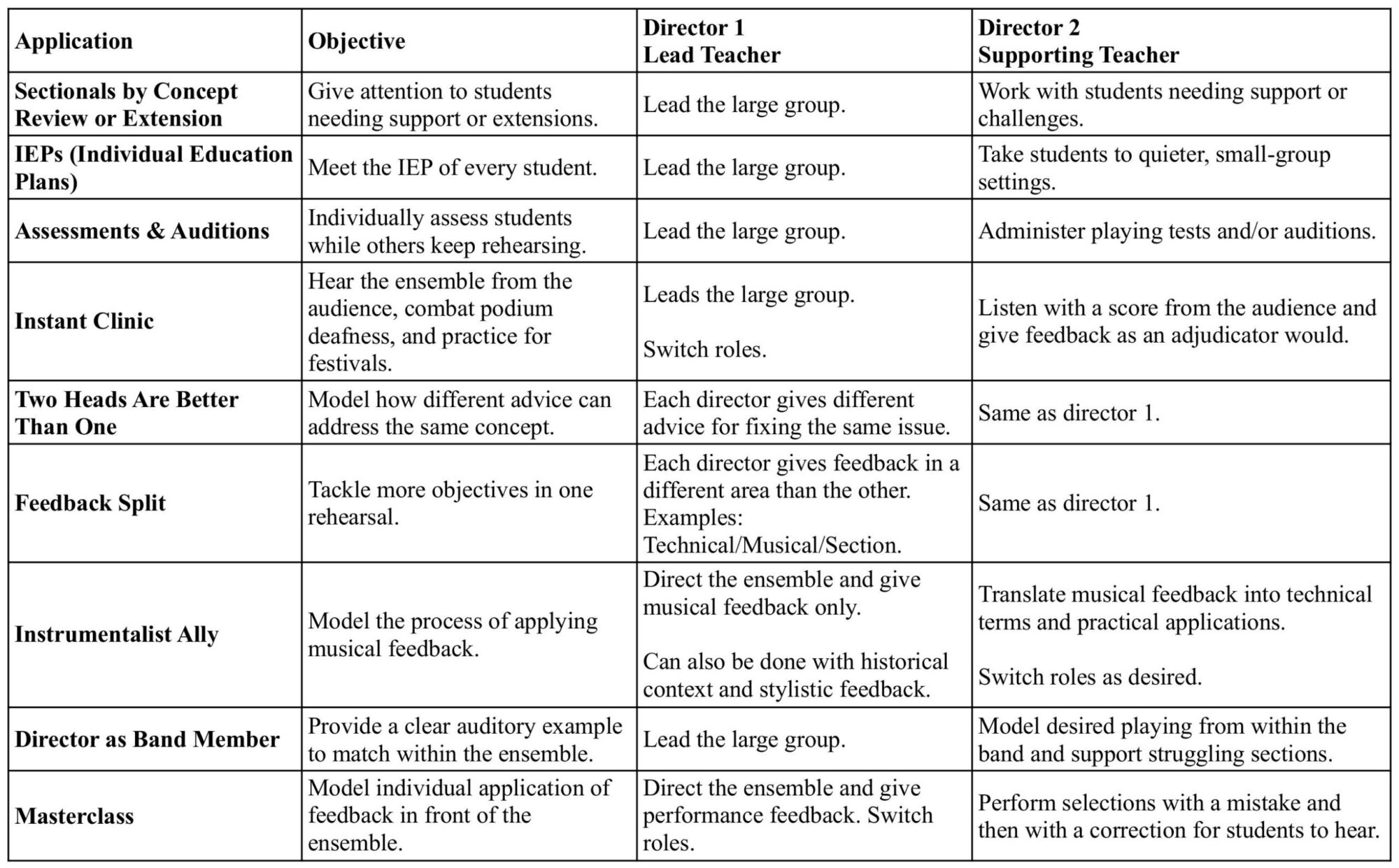
Differentiation, Assessment, and Feedback Techniques
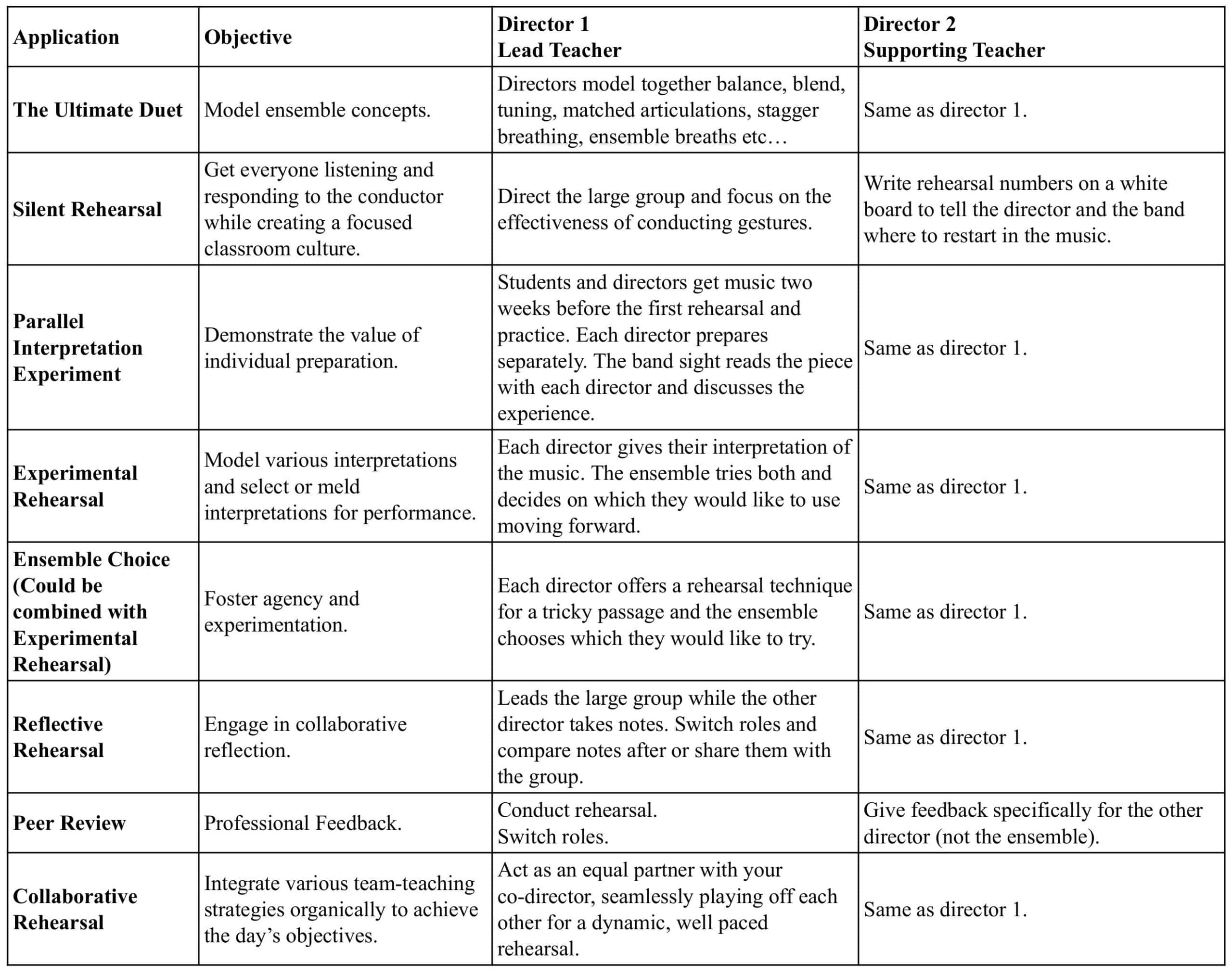
Techniques for Reflection and Advanced Techniques
Lindsey Williams has directed award-winning bands at all levels in the public schools since 2007. A Boston Conservatory alumnus, she has directed Binghamton University’s Wind Symphony and chaired numerous festivals and committees for NYSSMA (New York State School Music Association). You can learn more about the power teachers have to inspire each other in her latest book, Where the Valley Widens. Available on Amazon or anywhere you buy books. lindseywilliamsmusic.com
Instagram: @LindseyWilliamsMusic
Facebook: facebook.com/LindseyWilliamsMusic/
Amazon Book Link: https://bit.ly/AmazonWTVW








Leave a Reply
You must be logged in to post a comment.