In many band warmups that I’ve seen, brass players begin the daily routine with exercises that encourage control and flexibility, while flutes and other woodwinds are stuck drilling articulation patterns and chromatic scales. Sound familiar? As a flutist and a band director, I have seen this imbalance play out rehearsal after rehearsal. Then come the questions: “Why are my flutes always sharp? Why do they sound airy and shrill in the upper register?

How can I get them to develop a strong lower register?” The answer: start with flexibility! Making flute flexibility a core part of your fundamental warmup doesn’t just address these issues, it gives your flute section the strength, control, and musicality they need to perform with artistry.
Directors know the sound: a sharp, piercing high register and a barely audible low register. Students become frustrated as they try to “fix” their tone, often developing bad habits like turning in the headjoint too far towards their face, making incorrect adjustments in their embouchure, and many others. On the other side, many directors who aren’t fluent in proper flexibility techniques may not know what to look for and will default to what is provided in band method books, which often includes technique exercises. While these scale drills are important in developing a strong flute section, they lack a key component of intentional flexibility work. The result is that the flute students will miss out on a crucial layer of development in strength and control of embouchure.
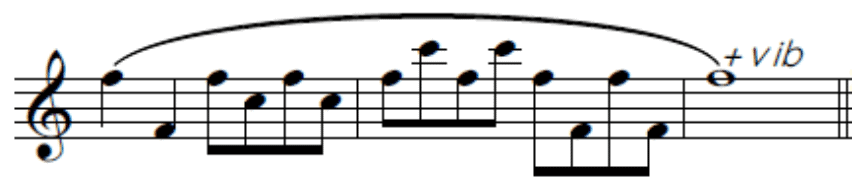
Let’s first talk about how you can include flute flexibility in your daily drill. I have developed a progressive system of flexibility exercises for the flute that are adaptable and can be implemented into your daily drill and performed alongside brass slurs. These slurs also work well for a sectional setting or even individual practice. Take the examples provided and simply transpose them beginning on a Bb, then move down chromatically to low E. This will match the typical pattern of brass lip slur patterns beginning in first position and moving downwards to seventh position. The examples provided begin on F.
1. Basic Octave Slur

2. Basic Harmonic Slur (students should not move their fingers to get the harmonic C to speak, they continue to finger F while sounding a C)

3. Switch between harmonic and “real” fingering (The diamond note represents the harmonic (do not change fingering) while the *starred note indicates that the “real” fingering is required.)
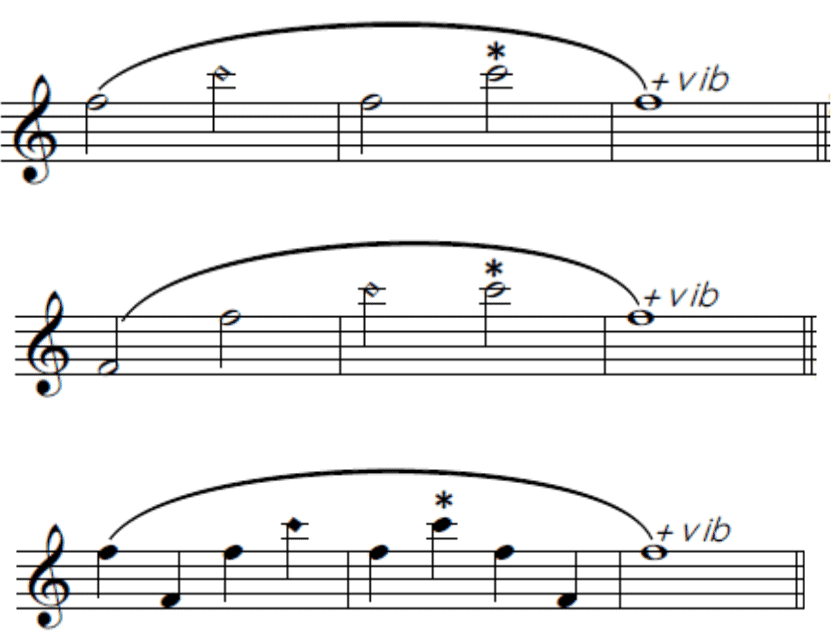
4. Use all “real” fingerings
What to look for:
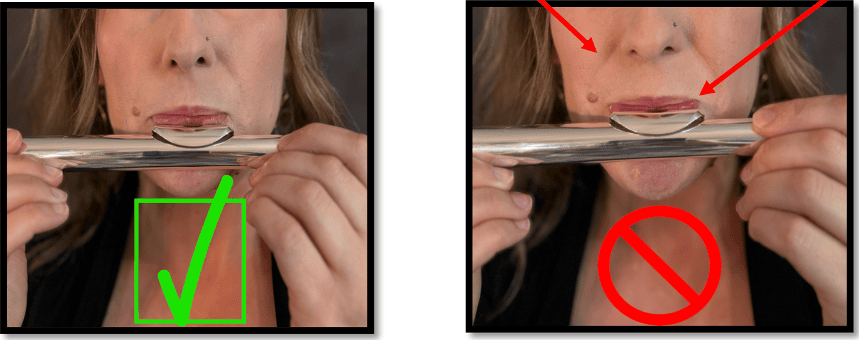
First, it is important to make sure that the headjoint is aligned properly on the face. The inside edge of the tone hole should sit slightly below the lip line, and the tone hole should be centered directly under the student’s aperture. Be sure there is no space between the bottom of the headjoint and the chin.
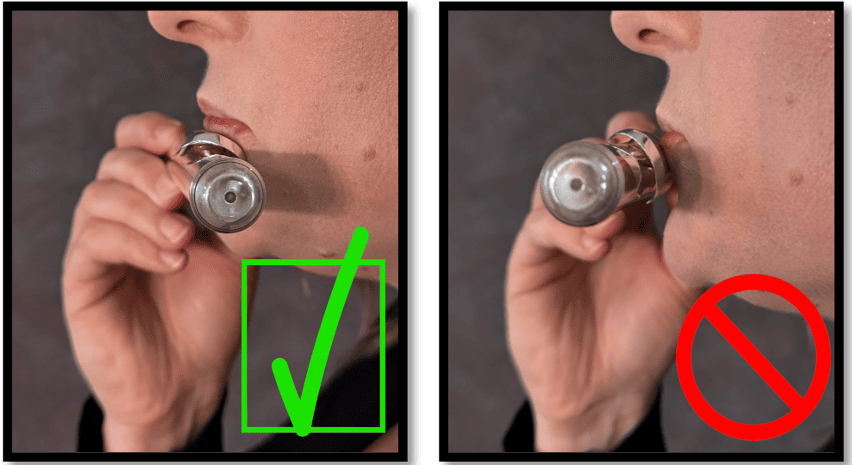
Second, look for movement of the bottom lip. When watching your students play from the side view, you should see the bottom lip move forward towards the heajoint as they play higher in the flexibility exercises. The movement should be smooth and mostly be isolated to the bottom lip. (Jaw movement should be minimal)
Third, check the corners of the embouchure. Many students tend to pull the corners back towards their ears, creating tension in the lips. This usually happens while attempting to play in extreme registers, especially as they move lower in range.
What to listen for: smooth intervals and steady tone. A flexible flute player shifts octaves properly by changing the direction of the air through movement of the bottom lip. Students attempt to force their way through register shifts because they want to have that top harmonic speak. If the top pitches sound loud and out of control, they are overblowing rather than allowing the bottom lip to do the work. Let me put it this way – it is so much better for the student to perform the exercise correctly with a proper embouchure and not have the harmonic speak at first, rather than just forcing the top pitch to screech out of the instrument. A good, quick test is to ask your students to make the top pitch of the exercise to be the softest. If it isn’t speaking, then it’s possible they were relying too much on the air speed rather than the air direction. Encourage your students to have patience when working on these studies. If they are using the proper flexibility technique, then it will happen! It sometimes takes time to develop, especially as you move into the exercises with a higher level of difficulty.
The result? A flute section that has not only upped their fundamental game in an ensemble warmup, but is now equipped to tackle challenges and musical demands found in standard band repertoire. With daily flexibility built into their routine, students gain control across larger intervals, can easily adjust pitch, and have a tone that is focused and refined. You will hear fewer cracked notes and less shrillness in the sound, even in those exposed moments that at one time felt risky. By incorporating flexibility into your daily drill and with proper monitoring of progress, you will be excited to include a flute feature in your next concert in no time!
Dr. Lyndsay Eiben is Director of Bands at the University of Texas Permian Basin, where she conducts the Symphonic Winds, teaches applied flute, and mentors instrumental student teachers. Lyndsay also performs as principal flutist with the West Texas Symphony.
Watch a full video of Dr. Eiben explaining and demonstrating these concepts on our Band Directors Talk Shop YouTube Channel HERE.
Looking for more on flute fundamentals? Check out these additional detailed articles:
Flute Embouchure: Simple Steps for Great Success
Tonguing & Embouchure Flexibility for Beginning Flute








Leave a Reply
You must be logged in to post a comment.