Compared to its woodwind counterparts, the trumpet is a simple instrument to put together. All one has to do is insert the mouthpiece into the instrument. However, that little piece of metal, the mouthpiece, plays a big role in the success or frustration one experiences on the trumpet. Many young students do not take time to incorporate the mouthpiece into their regular practice. In reality, much improvement can be accomplished with only a few minutes of additional time added to a practice session. The benefits to playing and musicianship that come from practicing the mouthpiece are definitively noticeable.
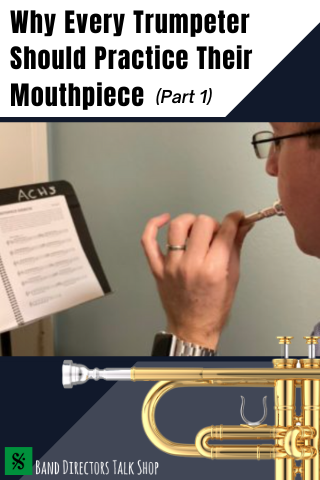
In reality, the trumpet is simply a brass tube with three valves that open different lengths of tubing. The valves serve the purpose of changing the overall length of the trumpet, effectively changing its fundamental pitch. However, this does not produce the pitches heard out of the bell. The role of the valves is to put the trumpet in the appropriate key to match up with the pitch being created on the mouthpiece. Put another way, trumpeters are playing the mouthpiece and coordinating the trumpet to match the pitches being created. This alone underscores the importance of being proficient at playing the mouthpiece.
Practicing the mouthpiece away from the instrument can greatly improve the quality of a player’s sound on the trumpet. A good mouthpiece sound should be full and free blown, with a clear core, free of unused air noise. It should not be so compact that it sounds small and/or forced. This element of mouthpiece practice can help expose a lack of air support, which is more obvious on the mouthpiece than the trumpet. If there is an airy sound, this can be a sign of poor embouchure focus, letting the player know they need to play with a slightly smaller aperture or firm up their corners. Starting straight on the trumpet can mask the root of these problems and lead to hours of frustration at not being able to play up to the desired level. Once a high-quality mouthpiece sound can be consistently created, there will be noticeable improvement in the overall trumpet sound.
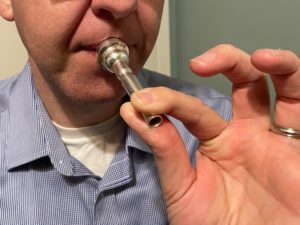
The mouthpiece is an excellent tool for diagnosing many other problems from articulation and lip slurs to range and endurance. Heavy articulation on the trumpet sounds even worse in the mouthpiece. Players can more clearly hear how the tongue is blocking the flow of air and if they are stopping the sound with the tongue at the end of the note (“tut, tut” instead of “tu, tu”). Slurs that cause struggles on the trumpet should be worked out on the mouthpiece. Whether they are octaves or thirds, if a player cannot perform the slur on the mouthpiece, they will not be able to play it on the trumpet. Same for range. Playing in all registers of the trumpet, especially the high and low extremes, will be made better with greater confidence and facility, not to mention sound and intonation. This improved efficiency in playing creates reduced dependence on “muscling” the instrument, lowering the effort used and increasing endurance.
Mouthpiece playing also helps players develop their musical ear. Unfortunately, even the most high end of trumpets does not come with notes preloaded into it, leaving the player to create the note that is going to be played. Many trumpeters seem to have the mindset of “if I press down the right valve and blow, the note will come out.” As wonderful as it would be if this were the case, the trumpet does not work this way. The player has to hear the note and create it, just like a singer. The trumpet, to a degree (or more specifically physics), helps notes lock in when they are close. But, these “corrected” notes usually are not the best sounding ones. By removing the trumpet and playing music on the mouthpiece, players have to exactly play every note. Close is no longer close enough. Can this cause more frustration? At first, yes. In the long run, though, it gives a player a more developed knowledge of the music they are playing, a greater likelihood of playing with the expression they intend, and, put simply, more likely to play the right notes.
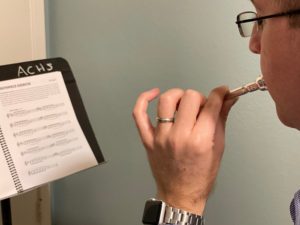
Mouthpiece practice does not have to be its own, dedicated practice session, or even be a large amount of time. It can easily be incorporated into the beginning of one’s daily warm-up and used in 15-20 second spots during practice sessions. During the warmup, it helps players re-establish the proper principles of note creation, which is why many warmup methods begin with mouthpiece playing. During the practice session, it can be used to quickly diagnose non-trumpet problems and correct them. Many of the problems we encounter on the instrument can be alleviated by just playing the mouthpiece.
Find Part 2 of this series – “How Every Trumpeter Should Practice Their Mouthpiece” – HERE.
Kyle Millsap is Associate Professor of Trumpet and Jazz and Texas A&M University-Kingsville. He oversees all aspects of the trumpet program, including applied instruction and directing the concert and jazz trumpet ensembles, as well as directing Jazz Band II and performing with the Kingsville Brass Quintet. He has performed and/or presented clinics at several state, national, and international conferences. For more information about Dr. Millsap or the trumpet program at TAMUK, visit millsaptrumpets.com or tamuktrumpets.com.

Related Reading:
Trumpet Tips: Playing Higher in the Beginning Range
Tone Centering for Trumpet Part II: Airflow and Embouchure
Practice for the Developing Trumpet Player
If you would like to receive our weekly newsletter, sign up here.
Don’t forget to like us on Facebook too!
Learn. Share. Inspire.
BandDirectorsTalkShop.com






Leave a Reply
You must be logged in to post a comment.