One of the most powerful tools available to every musician does not come in an instrument case. It is imagination. Before we play a note, we hear it internally. Composer Bruce Adolphe calls this ability the mind’s ear: our capacity to imagine, remember, and audiate music without the aid of an instrument.
Think about what that means for our students. If we ask a young musician to produce a beautiful, characteristic tone, what sound are they actually trying to produce? What does “beautiful” sound like in their imagination? We cannot create a sound we cannot first imagine.
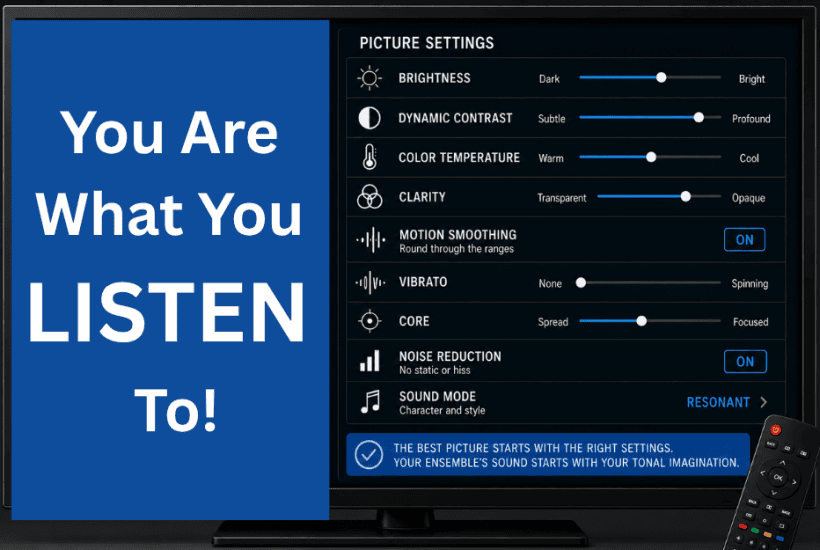
We all know the familiar saying, “You are what you eat.” For musicians, I would suggest another:
You are what you LISTEN to.
Start With Tone
Look at almost any band adjudication sheet, and you will find tone quality near the top. Tone is the foundation for nearly every other ensemble skill. But telling a student to “play with a better sound” is only useful if the student has an internal model of what that sound could be. We can be even more specific than “good,” “warm,” or “dark.”
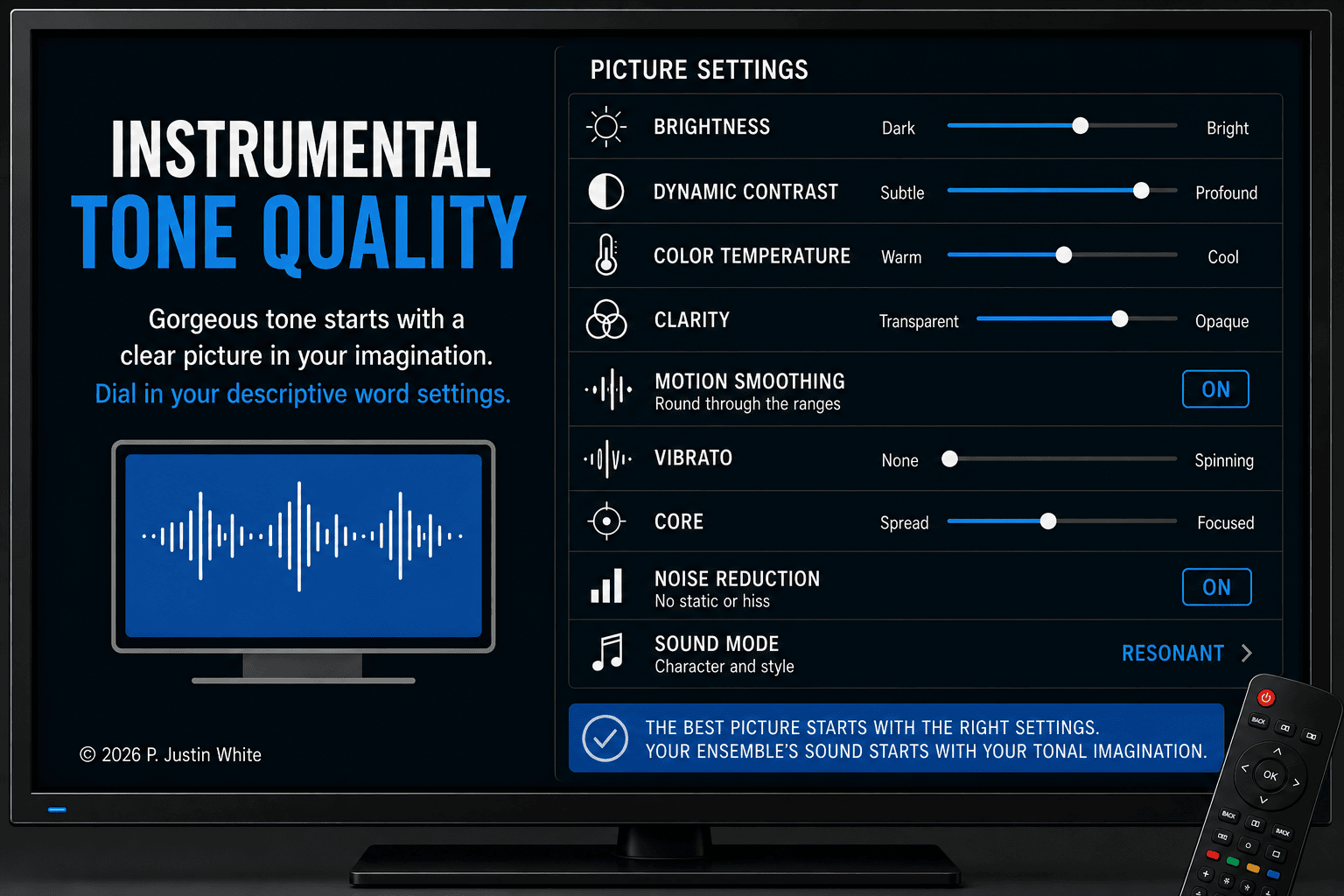
Is the sound focused or broad? Brilliant or mellow? Transparent or opaque? Does the performer use the same color throughout the phrase? How does the sound change with register, dynamic, articulation, or musical character? I sometimes encourage students to imagine they are adjusting the picture-quality setting on the TV. What would they adjust to recreate this sound?
The more precisely students can describe what they hear, the more precisely they can imagine it. Recordings give us that model.
At the University of Montevallo, I asked my faculty colleagues a simple question:
If you could recommend one recording that exemplifies outstanding tone quality on your instrument, what would it be?
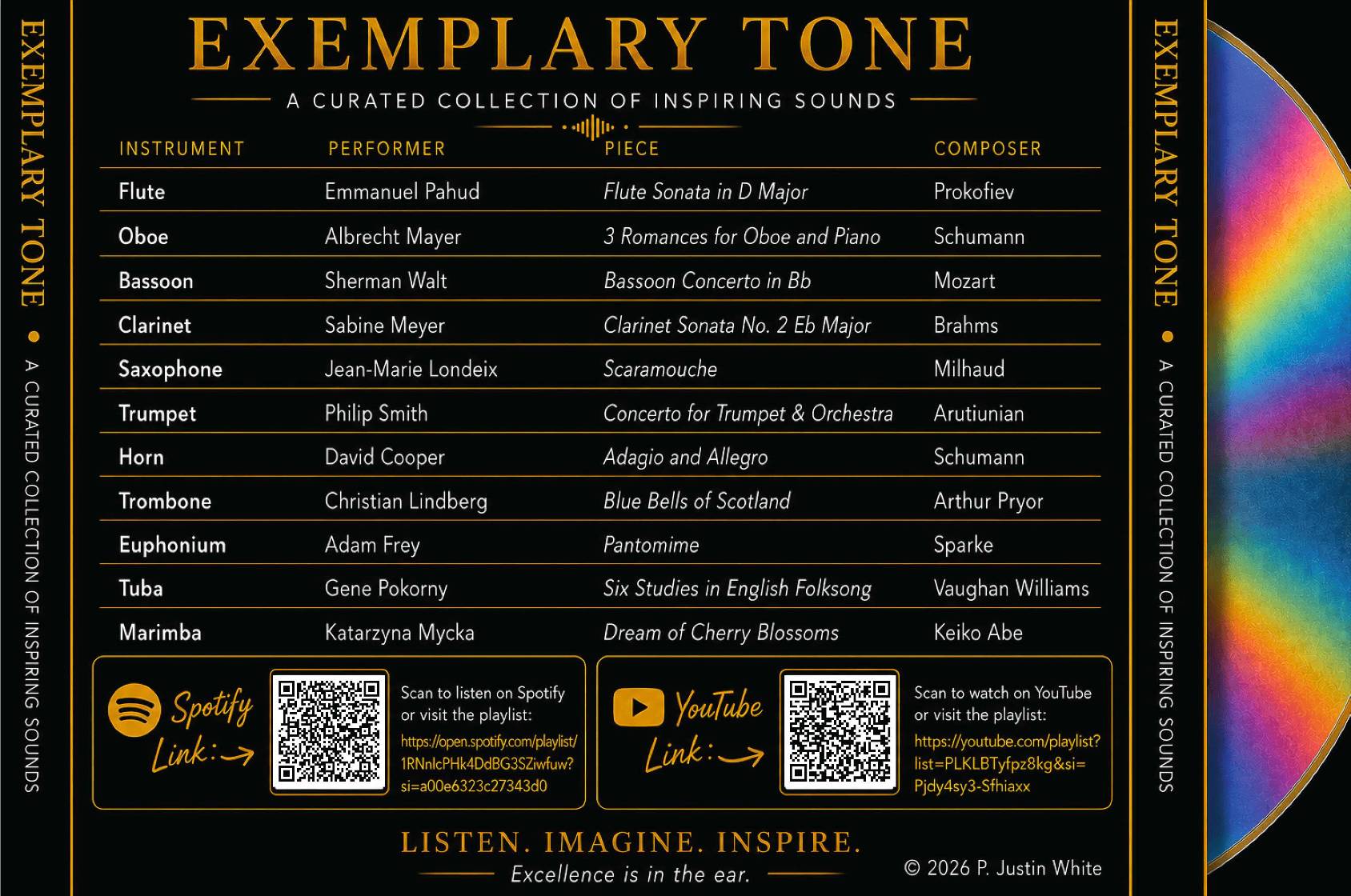
Their answers became the foundation of a listening playlist for our students. You can do the same thing. Ask your private lesson teachers, university faculty, colleagues, or even your students to contribute recordings. The goal is not to establish one “correct” sound. The goal is to fill our students’ ears with extraordinary possibilities.
Then we can teach them how to listen.
A carefully curated playlist for you and your students by the University of Montevallo Faculty:
YouTube link:
https://youtu.be/A3cDYnrqHLA?si=MqH3JgrAVolJrwiZ
Spotify link:
https://open.spotify.com/playlist/1RNnIcPHk4DdBG3SZiwfuw?si=bc98a43f82424a5a
Make Listening Part of Rehearsal
The obvious question is: Where am I supposed to find time for this?
You don’t necessarily need another five-minute block in your rehearsal plan. Instead, integrate listening into what you are already doing.
Try This Tomorrow
You do not need to completely redesign your curriculum to create a healthier listening culture. Start small. As students enter the band room tomorrow, play a recording of an extraordinary performer. Don’t announce it. Just let the music fill the room.
Later, ask:
“What did you notice about their tone?”
Then choose one of those qualities and make it the tonal goal for your first long tone.
One recording.
One question.
Do that consistently, and listening gradually stops being an assignment and becomes part of the culture of your ensemble. Mention your favorite performers during rehearsal. Sometimes, I will say them for rehearsal letters, “A, as in Albrecht Mayer.” Ask your students who their favorite performer on their instrument is.
Our responsibility is larger than preparing the next concert or earning the next superior rating. We help students become good artistic citizens who can recognize beauty, pursue artistic excellence, and keep listening long after they leave our rehearsal rooms.
Before our students can consistently produce an extraordinary sound, they need to know what one sounds like.
Beautiful tone begins in the mind’s ear.
Because, in the end, you are what you LISTEN to.
Justin White serves as Interim Director of Bands at the University of Montevallo. He earned the Doctor of Musical Arts in Wind Conducting from the University of Georgia, where he studied with Nicholas Enrico Williams. His previous appointments include Interim Director of Bands at Sam Houston State University and Samford University and Assistant Director of Bands at the University of Alabama.
Resources
Bruce Adolphe, The Mind’s Ear & What to Listen for in the World
Jamey Aebersold, Jazz Handbook
Jim Childers, Listening Excerpts to Develop Band Musicianship &Listening Excerpts to Develop Jazz Musicianship







Leave a Reply
You must be logged in to post a comment.